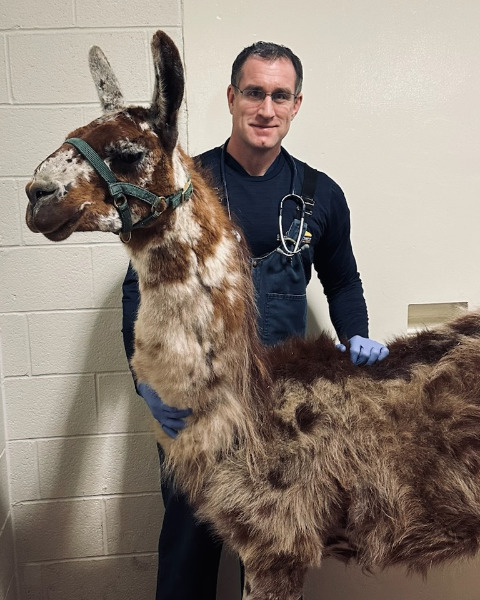
Assistant Professor UTKCVM Knoxville, TN, United States
Abstract: Background – Acepromazine is used as a tranquilizer in goats. However, there is pauce information available on its pharmacodynamic effects (PDE) and pharmacokinetic profile (PK) in this species. Objectives – The primary objective of this study was to investigate the PDE of intravenous (IV) acepromazine in goats. A secondary objective was to describe its PK. Animals – Six healthy adult goats (1 castrated male and 5 females) of various breeds with weight 64.43 kgs. Methods – Blood samples were collected at 0, 2, 5, 10, 15, 30 minutes and at 1, 2, 4, 8, 12, 24 hours after administration of 0.1 mg/kg of IV acepromazine. Packed cell volume (PCV), total solids (TS), and onset and time spent in recumbency were the PDE measured variables of interest. Scores from a standardized tranquilization scale were assigned pre-administration and subsequently, at every collection timepoint. PCV, TS and tranquilization were tested via RM-ANOVA. Significance was set at a p< 0.05. PK parameters were determined via a compartmental analysis after plasma acepromazine concentration determination by liquid chromatography-tandem mass spectrometry. Results – No adverse effects were observed. PCV decreased significantly at the 1 (p=0.0481) and 2-hour (p=0.0088) timepoints, with no changes in TS. Tranquilization was greater at 0.25 (p=0.0026), 0.5 (p=0.0101) and 1 (p=0.0101) hour after administration. Recumbency was observed in 5/6 goats (duration range: 8-237 minutes). Pharmacokinetic parameters were modelled. Conclusions and Clinical Importance – Clinicians should be aware of changes to PCV and the potential for variable recumbency in goats administered intravenous acepromazine.